
A olayground for the rich and famous
I was surprised to discover that the region south and west of Washington, D.C., has been a destination for visitors for nearly as long as the United States has existed. What makes The Greenbrier Resort so special, and why have people traveled there for more than 250 years?
Every world-class resort begins with a hook, a reason people feel drawn to visit. Webster defines a hook as “something intended to attract or ensnare” or “a selling point or marketing scheme.” The original hook that brought people to the Greenbrier area fits neither of those definitions. It was simply a pool of water with a bad smell. That smell came from the high sulfur content in the mineral springs located there.
When settlers first arrived and began trading with Native Americans who had lived in the region for centuries, they soon heard stories of the springs’ remarkable healing powers. The first recorded account of settlers using the springs for medicinal purposes dates to 1778, when a Mrs. Anderson, who suffered from chronic rheumatism, bathed in the waters and even drank the foulsmelling brew. Within a few weeks, her pain was greatly reduced. Word quickly spread throughout the region about the healing properties of these mountain springs.
In 1784, Thomas Jefferson mentioned the springs in his book “Notes on the State of Virginia,” writing, “We are told of a Sulphur spring on Howard’s Creek of Greenbrier.” Jefferson acknowledged the stories of healing, though he offered no confirmation of their truth.
Cabins were soon built by early entrepreneurs. Visitors arrived, rented the cabins, and took “the cure.” From these humble beginnings, The Greenbrier was born.
The rich and famous
The original log cabins eventually gave way to elegant summer homes built by some of America’s wealthiest and most influential families.
By the mid-1800s, demand for accommodations around the springs had grown so dramatically that a new hotel was built and opened in 1858. Originally named The Grand Central Hotel, it later became known as The Old White. It was a grand destination indeed, offering 228 guest rooms and a dining room that seated 1,200 guests, the largest in the United States at the time.
Social standing and old-fashioned snobbery ruled the day at The Old White. One story survives of a group of aristocratic ladies sunning themselves on the front porch while discussing their family backgrounds. One proudly announced that her father was president of Pittsburgh Steel. Another replied that her father was the president of Western Copper. A third added that her family owned the largest meat-packing company in Chicago. Finally, the fourth woman was asked, “What does your father do?”
“Oh, he’s a farmer,” she replied. After she left, several of the ladies laughed at the thought. “A farmer’s daughter. What is The Old White coming to?”
One woman quietly corrected them. “She forgot to mention the name of the farm is Mount Vernon, and her father’s name is George Washington.”
The new playground of the rich and famous was short-lived.
In 1861, the Civil War arrived at The Greenbrier as Union and Confederate troops battled for control of the area. During the war years, the resort served as headquarters for both sides as the territory repeatedly changed hands.
After the war, it took two years to restore the property to full operation. Many doubted it would ever regain its former prestige. Instead, The Greenbrier returned stronger than ever. Old patrons came back, including former Southern plantation owners eager to relive memories of their past social lives. The customs and manners of the Old South found a second home at The Greenbrier.
The New Greenbrier
In 1869, access to the resort changed forever. Until then, travel to The Greenbrier was possible only by stagecoach, an expensive and time-consuming journey that limited visitors largely to the very wealthy. On June 29, 1869, the first train arrived at White Sulphur Springs Station. Overnight, a trip that once took weeks or even months could now be completed in days. Instead of arriving with a single small suitcase, guests came by rail with trunks full of clothing for every possible occasion.
The original draw of the mineral springs remained, but visitors now wanted more than medicinal baths. Advances in medicine had made many of the ailments of the 1700s less threatening. Guests wanted entertainment. They wanted leisure. They wanted fun. Lawn parties and ballroom dancing became weekly traditions. Fine dining and gourmet cuisine were expected every evening.
Then, in 1913, America’s newest pastime arrived at The Greenbrier. C.B. Macdonald, often called the father of American golf course architecture, was hired to design and build a new 18-hole championship golf course for the resort that rivaled the best found in Europe. It was first known simply as the Number One Course, but later became The Old White Course.
In 1914, the resort opened an additional hotel called The Greenbrier. Tennis courts were added, along with swimming, croquet, and other recreational activities. The Greenbrier could now rightfully claim its place as a world-class resort, where both the wealthy and the growing middle class could mingle on what had by then become known as a vacation.
By this point, nearly every titan of American industry had visited, including the Vanderbilts, Rockefellers, Flagers, Bloomingdales, and Carnegies. Some even built summer homes nearby. Most U.S. presidents also made regular visits. One cottage eventually became known as the President’s Cottage, and today it still stands as the President’s Cottage Museum.
By the start of the 20th Century, ntury, The Greenbrier was booming, but many of its buildings, including The Old White Hotel, were nearly 50 years old and badly in need of repair. Worse still, the owner had fallen behind on property taxes. The resort was thriving with guests but struggling for cash. With help from the governor of West Virginia, the property was sold to the Chesapeake & Ohio Railroad, which owned the rail line into White Sulphur Springs.
The C&O wasted no time. It launched a complete restoration of the hotel and cottages. Everything was to be first class. They even added a dairy farm for fresh milk and built a second golf course. Armed with fresh paint, expanded golf facilities, and the marketing power of one of America’s largest railroads, the C&O set out to make The Greenbrier known worldwide as both a premier resort and a championship golf destination.
The sports
In 1922, they secured the United States Women’s Championship, the equivalent of today’s U.S. Women’s Open, won by 19-year-old Glenna Collett. Inspired by that success, the railroad once again hired C.B. Macdonald and his assistant, Seth Raynor, to build a third course, eventually called the Greenbrier Course. By then, golf’s greatest names were well acquainted with Greenbrier golf. Bobby Jones, Walter Hagen, Babe Didrikson, Zaharias and even the legendary Francis Ouimet were all said to have played there.
The 1920s became known in newspapers as the Golden Age of Sports, and nowhere was that more evident than at The Greenbrier. Tennis star Bill Tilden played matches on its courts. Boxer Gene Tunney trained there. Olympic gold medalist Martha Norelius practiced in the indoor heated pool.
Yet by 1922, The Old White Hotel had again fallen into serious disrepair and failed a West Virginia fire safety inspection. The building was condemned and, sadly, demolished.
The hotel today
Although the main Greenbrier hotel remained open, the loss of 250 rooms created a major shortage. As demand continued to exceed supply, the C&O made a bold decision in 1930. They rebuilt and doubled the size of The Greenbrier Hotel.
Now with abundant rooms and the full support of the railroad, The Greenbrier became one of America’s famous “Railroad Resorts,” alongside Pinehurst, Sea Island, and Palm Beach. Advertisements promised guests they could board sleeper cars anywhere along the East Coast at night and wake up staring at The Greenbrier.
Sam Snead
In 1936, The Greenbrier hired a rising golf star who would become forever linked to the resort. Sam Snead arrived as the new golf professional and quickly amazed guests with his exhibitions and skill. Except for a break caused by a contract dispute, Snead represented The Greenbrier until his death in 2002.
The resort continued as one of America’s premier destinations until World War II, when the C&O Railroad was notified that the United States government needed the hotel for military use. In 1942, the property was condemned and seized by the government, becoming a hospital for thousands of wounded American soldiers during the war.
Dorothy Draper
After the war, in 1946, The Greenbrier was returned to the C&O Railroad, which hired legendary designer Dorothy Draper to renovate and redecorate the hotel. For those unfamiliar with Draper, imagine Martha Stewart, Joanna Gaines, and Picasso somehow combined into one person. That was Dorothy Draper.
She created the magnificent visual identity that still defines The Greenbrier today. The flooring, wallpaper, paint colors, and decorative style remain faithful to her original vision and are regularly refreshed to preserve their vibrant beauty.
The Bunker
The next great chapter in Greenbrier history began with something that was never supposed to be public knowledge: Project Greek Island. During the Cold War, fear of nuclear war gripped the nation. Americans built fallout shelters beneath their homes, hoping to survive the unimaginable. Congress shared the same fear.
Washington, D.C., was an obvious target, and by then, The Greenbrier had become not only a resort for the wealthy but also a favorite retreat for politicians. In 1955, a secret plan was created to build a bunker beneath The Greenbrier to house Congress and key government officials in the event of a nuclear attack. Because the resort was always under some form of expansion or renovation, construction of the bunker was easy to conceal, especially with unlimited government funding. The top-secret bunker was completed and ready for use in 1961.
For three decades, the bunker remained operational and ready to receive Washington’s elite. Thankfully, it was never needed. By 1992, however, its existence had become widely known and had even been featured in newspapers and magazines. Members of Congress eventually decided that a secret bunker that was no longer secret offered little protection. The site was abandoned. Today, the bunker remains intact and serves as one of The Greenbrier’s most fascinating attractions.
The amenities
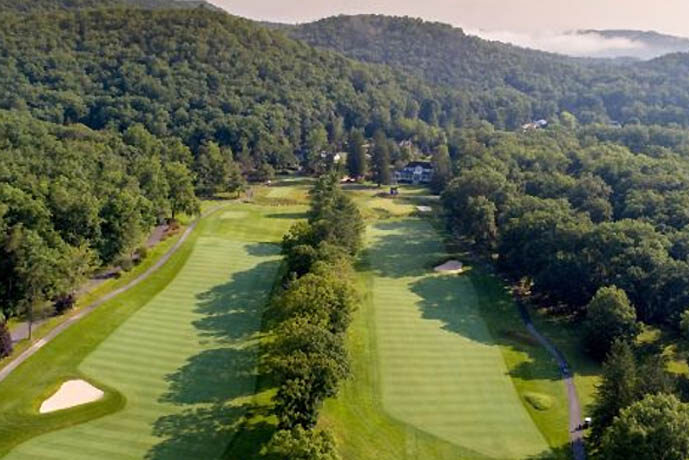
Over the past 50 years, The Greenbrier’s reputation has only grown stronger. It has hosted major professional golf events, including the 1979 Ryder Cup and the 1994 Solheim Cup. Today, the world-famous Old White Course is maintained with extraordinary precision, and as I learned firsthand, it remains every bit as challenging as its reputation suggests
I have traveled the world and stayed at countless resorts, yet nothing compares to the experience and amenities offered at The Greenbrier. Visitors can enjoy world-class trout fishing, off-road adventures, learn falconry, alongside tennis, swimming, croquet, bowling, archery, skeet shooting, and a movie theater complete with fresh popcorn and the latest films.
The business side of the resort is equally impressive, with convention and meeting spaces capable of hosting thousands. All this comes with a world-class Spa, personally attested by wife, Katherine. Need a wedding venue? The Greenbrier Chapel is unforgettable. There is even a full sports complex that regularly hosts NFL training camps. This year, the New York Giants will hold camp there.
Not bad for a place in the woods known for a spring with smelly water.
Larry Hall is an Alabama Golf News Contributor
Featured image courtesy of The Greenbrier
Have a story idea or a news item to report to Alabama Golf News? Email gregg@alabamagolfnews.com